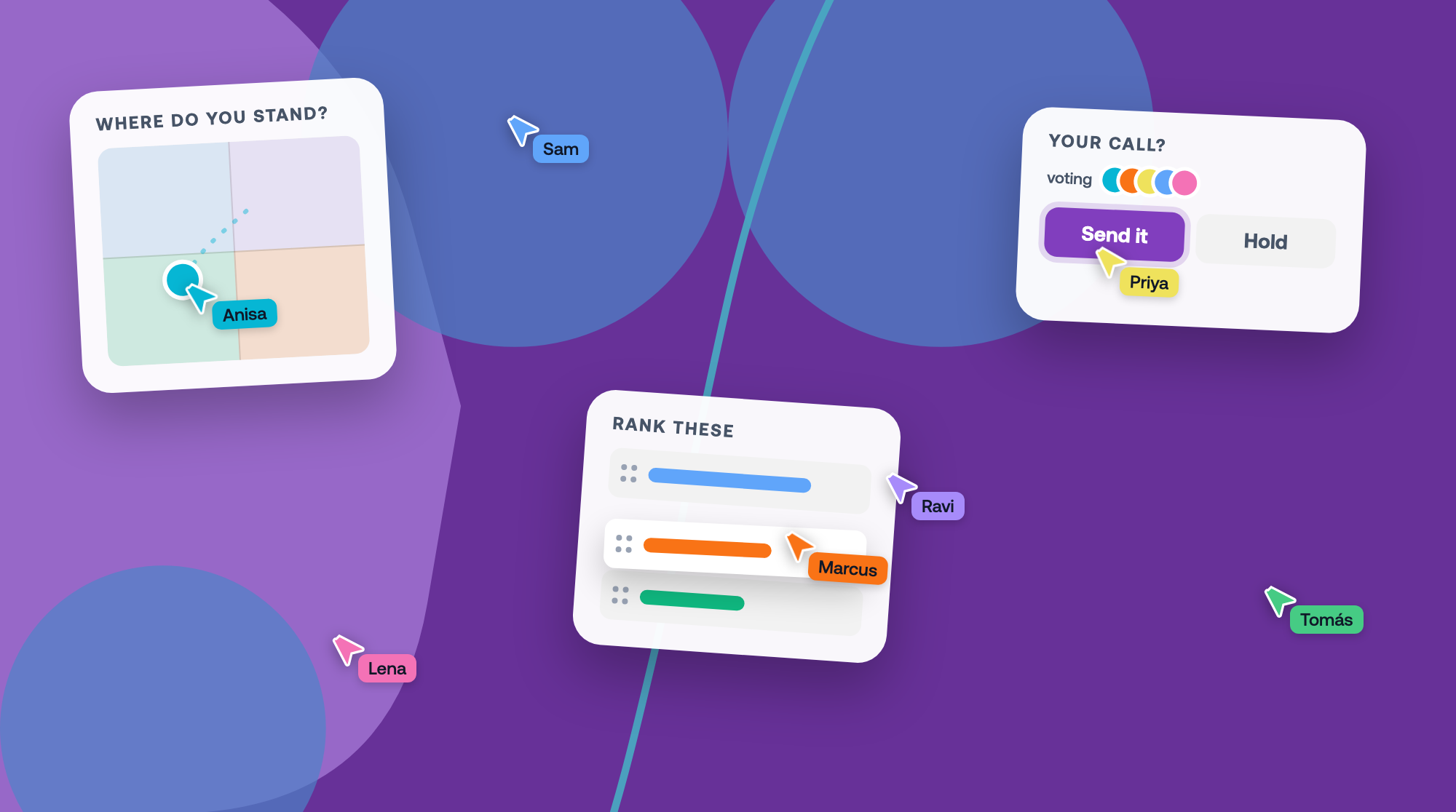
Publicis Sapient was rolling new Leadership Expectations out across the firm. We turned them into a browser-based space simulation.
Challenge: Make a new set of firm-wide Leadership Expectations real for 20,000 people, experientially, not as a deck
What we built: PS Starship, a browser-based space simulation, made by four people in ten weeks
Scale: Built for 20,000 including 1,300+ leaders
Reception: "So engaging and realistic" - and team leads asking for more
Publicis Sapient was rolling a new set of Leadership Expectations out across the firm - 20,000 people. The hard part of a shift that size isn't naming the behaviors; it's getting people to actually work differently, when the default playbook is a slide deck nobody remembers. One of the PS team had already proved a better way in one room: a 90-minute escape room, ten senior leaders, her in a space suit, real pressure - the CHRO loved it enough to run a taster for the CEO. The brief was to keep that feeling for 20,000 people, in a browser, without a facilitator, for someone in Mumbai or Melbourne who'd never heard of it.
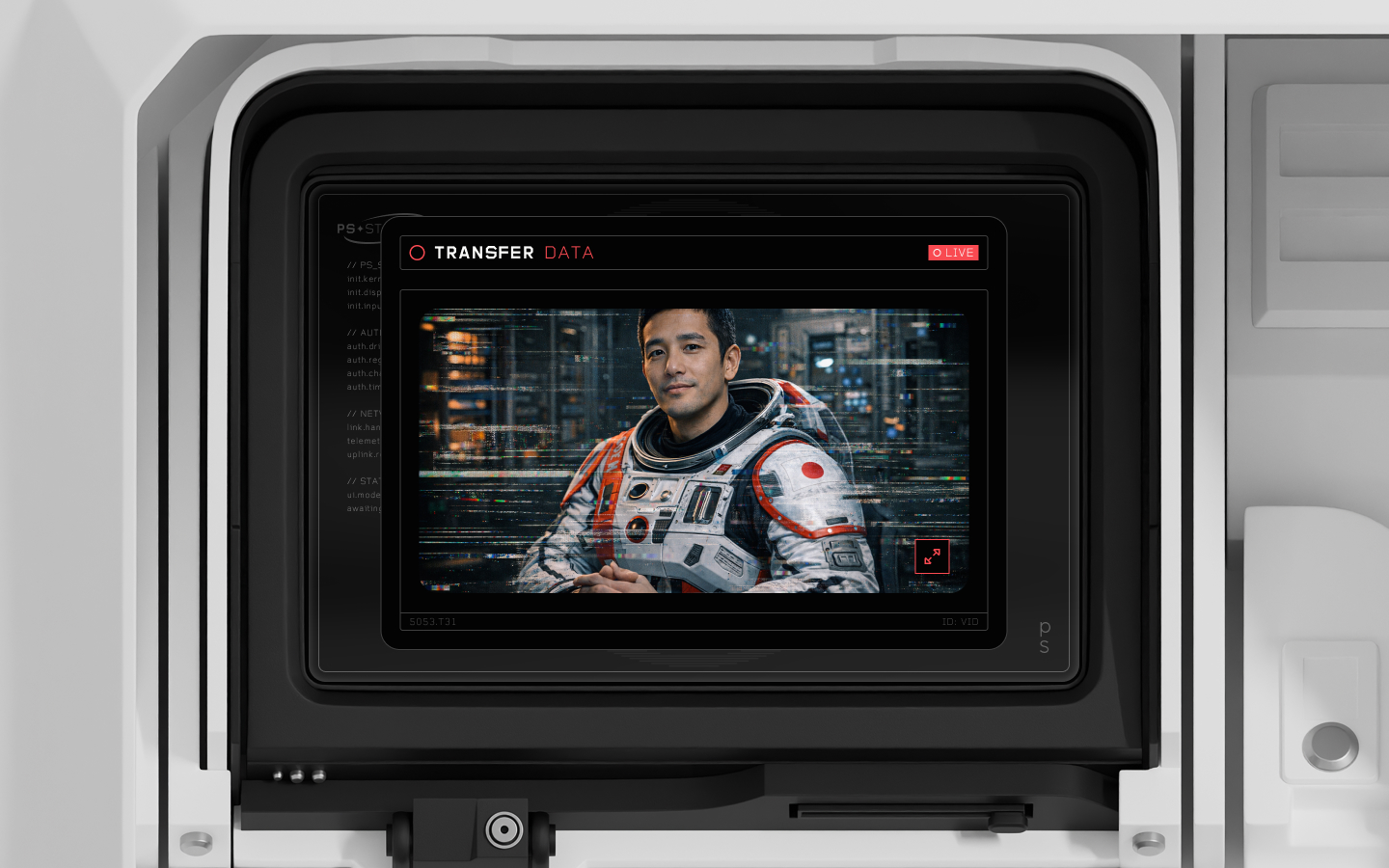
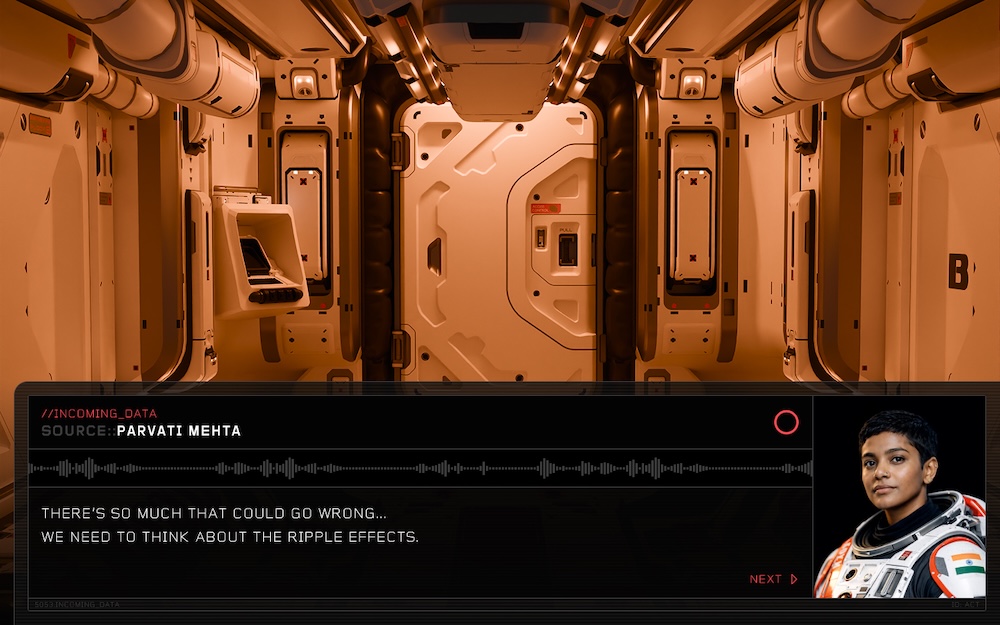
Players become crew on a transformation vessel bound for Galaxy Next. A solar storm hits, systems fail, and they are among the last seven conscious - suddenly in charge. Three missions, each one a Leadership Expectation made playable: Build Extraordinary Teams, Architect the Future, Drive Outcomes That Matter. No failure states, only different outcomes that reveal different leadership approaches. You can't lose, but you notice what your choices cost.
Playing it alone does one job. Getting a team to say out loud what they chose, and hear what that looked like from the outside, is a different one. So we built a 60-minute follow-on workshop with three original drills, ran it 20 times for 400+ people on Rondo, and trained Publicis Sapient's own facilitators to run it without us.
That's its own story: how the workshops work →
Most of what made PS Starship work is what a workshop can't do. We started where filmmakers start - a treatment, not wireframes - then built across disciplines you would normally hire five separate vendors for:
The trap with branching is fortune-cookie feedback - "You showed strong leadership!" Meaningless. Getting outcomes that felt observed, and that mapped back to the Leadership Expectations without smelling like a rubric, took longer than anything else. PS knew their people would spot corporate packaging a mile off.
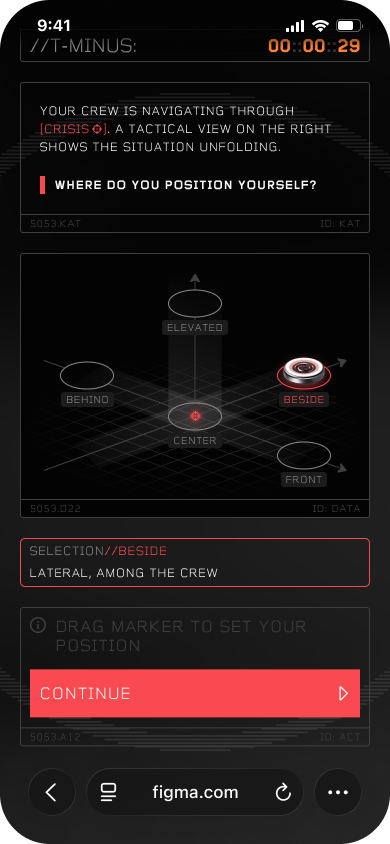
We didn't invent a leadership model either. The two-minute flight check that opens the experience maps to the leadership model PS already had, so the profile someone gets at the end speaks the language their firm already uses. Working through that mapping we found one of our five scenarios was reading caution as empowerment, and said so before launch rather than ship a scenario that scored the wrong thing.
Our team was four people. Ten weeks, including Christmas. No game engine, no VR, no metaverse budget. The two who wrote the missions also made the videos and directed the voice. By mid-January we were a couple of days behind, with a date already in the diary to decide whether Mission 3 got cut. It stayed.
Mission 2 puts you in a cargo bay with a hull breach and a second debris wave coming, choosing what to save. In the first build, three items were destroyed at random when the wave landed. It read as arbitrary. Players weren't under pressure, they were unlucky, and the mechanic ended up teaching luck. We rebuilt it so one unsecured item drifts off every few seconds and anything already secured stays safe. Same pressure, and now the mechanic teaches what the mission is about: the longer you take to decide, the less there is left to protect.
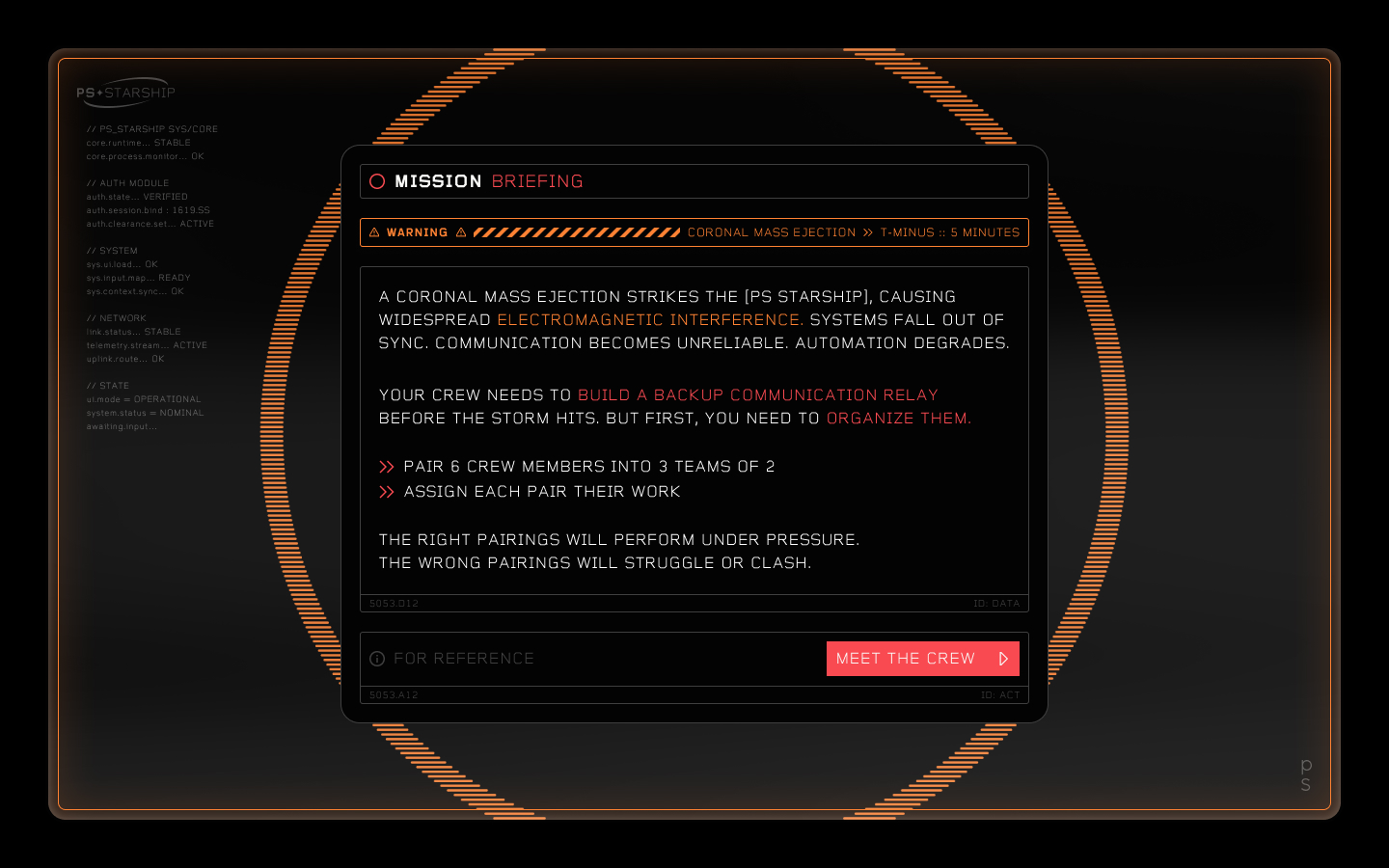
Ten people at PS played the whole thing a week before launch. Almost nothing that came back was about the story. It was about words and buttons. Our copy was overwritten - "atmosphere is venting" became "air is leaking out", and a lot of sentences got shorter. One tester watched the timer run down on Mission 3 without ever realizing they were meant to scan the ship first, then picked an answer with no reasoning behind it. That was a broken interface rather than a wording problem, and there were five days to fix it.
PS Starship has reached 1,300+ leaders so far, opened on whatever evening and in whatever time zone suited them, with nobody in a space suit at the front of the room. The full rollout across the firm is Publicis Sapient's own and still in progress.
Four people, ten weeks, no game engine and no metaverse budget. The part worth taking from it isn't the spaceship. It's that a firm-wide leadership rollout can be something people actually sit through, built at a speed and a size that doesn't need a studio of fifty.
Rolling out a leadership shift of your own? Book a demo →