70% of training is forgotten in a day. Decision rehearsal - practicing judgment under pressure - builds the pattern recognition that content alone can't deliver.
This post in 20 seconds:
You can't lecture someone into expertise. It's pattern recognition - built through enough varied situations that the brain starts organising them on its own.
But you can compress the experience that builds it. Drills to sharpen the moves. Scenarios to practice when to use them. Stakes that feel real, even when they're not.
We call it Decision Rehearsal. Think of it as a flight simulator for judgment.
On January 15, 2009, that’s how long a pilot had to make a decision that would determine whether 155 people lived or died.
A flock of Canada geese had just destroyed both engines of US Airways Flight 1549. The aircraft was three minutes into a routine departure from New York’s LaGuardia airport, climbing over the Bronx, when the cockpit filled with the ugly sound of birds hitting metal and then - nothing. Both engines, gone.
A 70-ton aircraft, gliding over one of the most densely populated places on earth. No thrust. Dropping fast. Air traffic control offered two runways - Teterboro to the west, or back to LaGuardia behind him. The pilot considered both. He rejected both. He put the plane in the Hudson River.
Later analysis would confirm what he somehow knew in the moment: not enough altitude, not enough glide. Attempting either runway would have killed everyone on board.
You probably know this story. Clint Eastwood made it into a film. Tom Hanks played Captain Chesley “Sully” Sullenberger, and the movie did what movies do - it made the landing look like a miracle, a moment of superhuman calm.

But Sully himself didn’t describe a miracle. He described something closer to recognition - a pattern surfacing from thousands of hours in cockpits and simulators, matching itself to the crisis unfolding in front of him. He wasn’t calculating. He was seeing.
“It was not a loss of control,” he said later. “It was a transfer of control - to a different way of flying.”
Sully had been preparing for a moment like that his whole career. Not that specific moment - no one trains for “geese destroy both engines over Manhattan.” But he’d rehearsed enough emergencies, in enough variations, that when a new one arrived, his pattern library had something to offer.
He had simulators. Most of us have PowerPoints.
How do you prepare for a decision you've never faced - in a moment you can't predict - when the stakes are real?
“It was not a loss of control...it was a transfer of control - to a different way of flying.”
Sully’s simulators cost millions. They’re maintained by teams of engineers. They replicate the physics of flight so precisely that pilots can train for emergencies they’ve never seen and may never see - and still respond correctly when one arrives.

The rest of us don't have that. What we have is $101.8 billion a year spent on workplace training in the US alone, most of which isn’t effective. Business schools aren't much better. Different price tag, same gap.
Part of the problem is the word itself. In business, "training" sounds remedial - something for new hires, something you have to endure, something that implies you don't already know what you're doing.
Pilots don't have this stigma. Neither do surgeons, musicians, or athletes. In those fields, training is what experts never stop doing. When the consequences are immediate and visible, no one confuses preparation with weakness. You either land the plane or you don't.
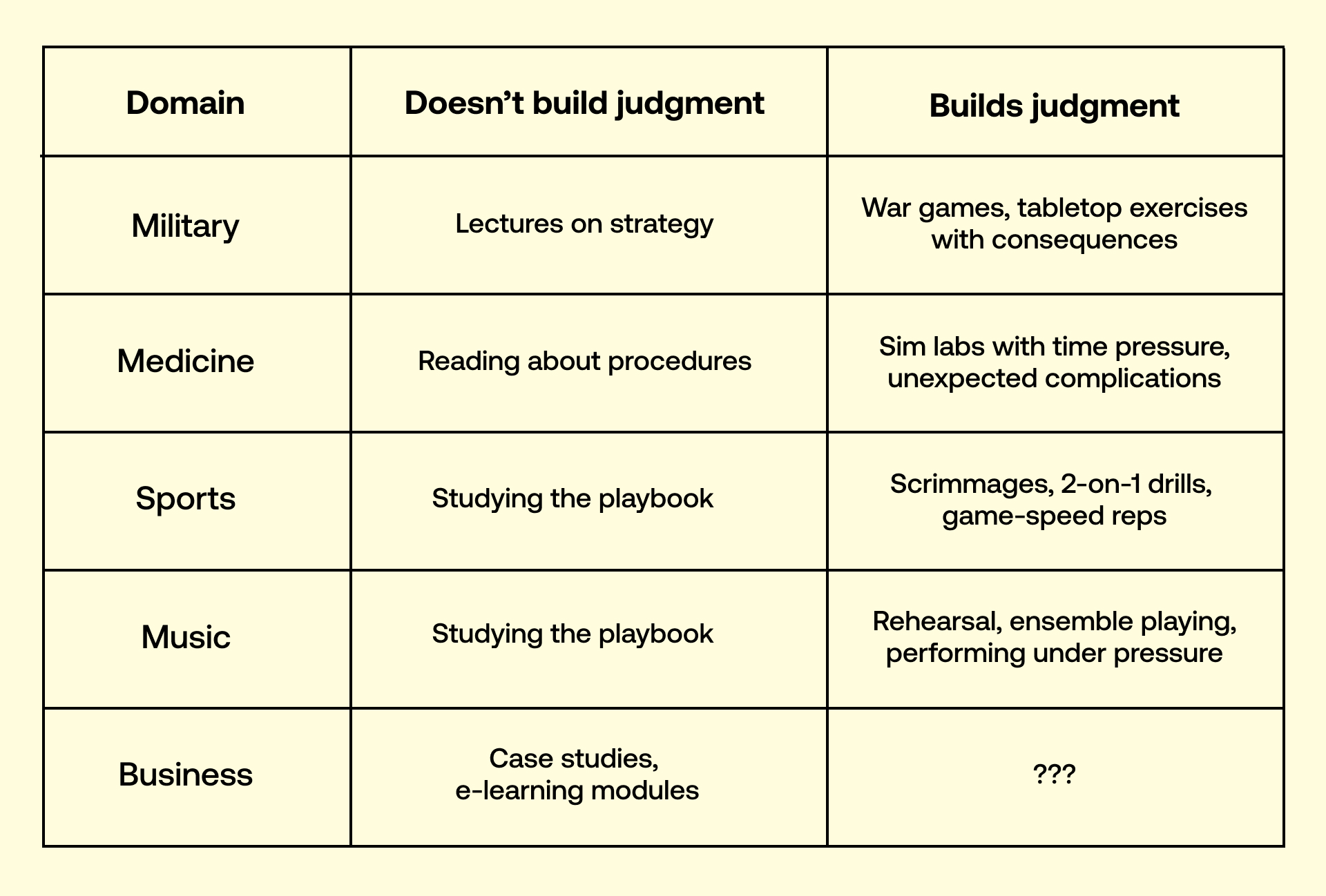
Every high-stakes field has figured this out. Business is the outlier.
In much of white collar work, results are murkier - easier to attribute to luck or circumstance. We assume you either have it or you don't.
And now there's a new pressure: AI is making the knowledge layer free.
If information retrieval and analysis are increasingly automated, what's left to develop? The parts that can't be looked up.
Psychologist Robin Hogarth calls this the difference between "kind" and "wicked" learning environments. In kind environments - chess, golf, flight simulators - feedback is immediate, rules are clear, and practice maps cleanly to performance. In wicked environments - most of business [1] - feedback is delayed, causation is murky, and the same action can succeed or fail depending on context.
Pilots train in kind environments. Business happens in wicked ones.
The issue isn't whether to train. It's that what passes for training in business isn't worthy of the name.
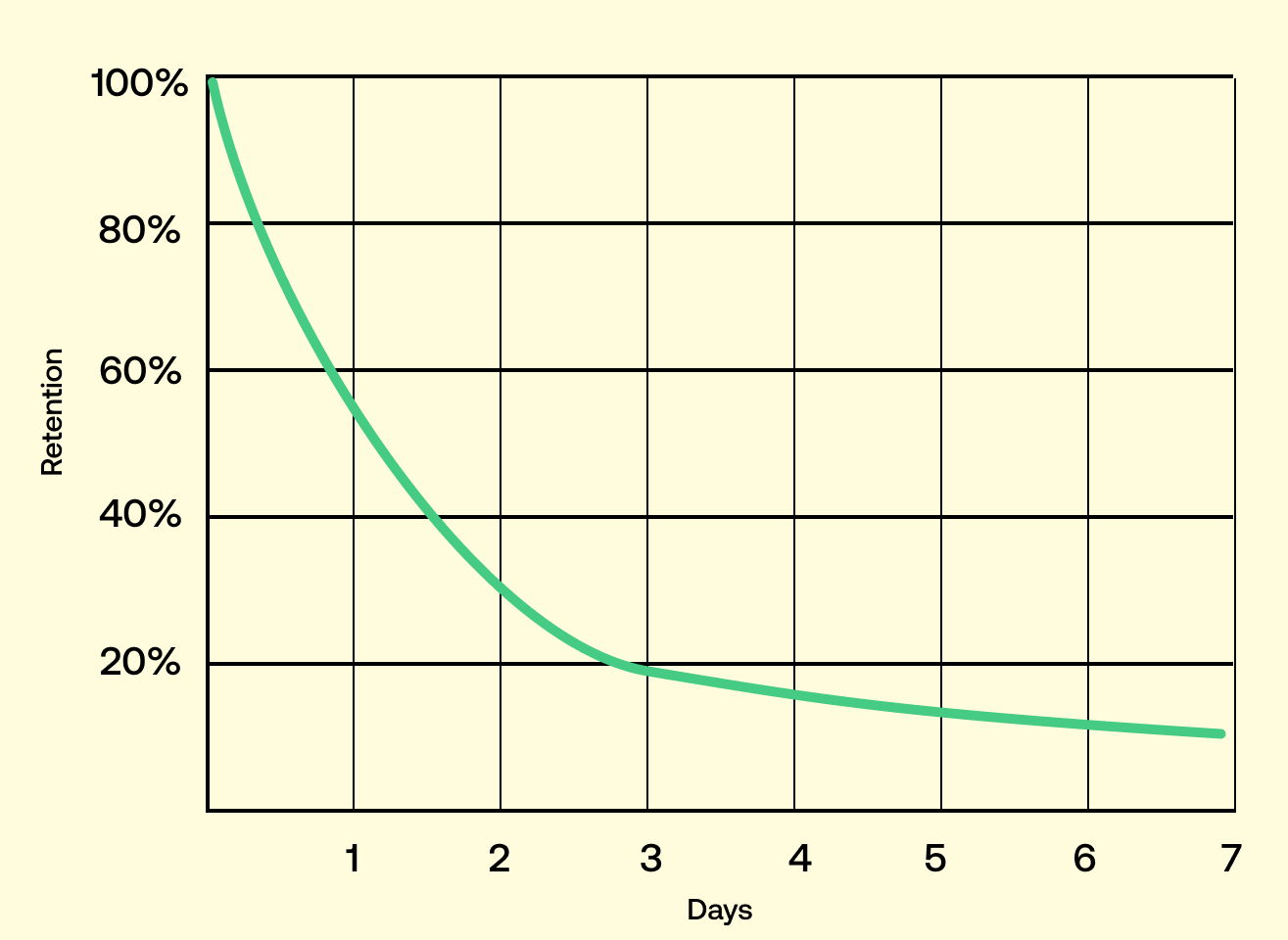
The research is... well, kinda damning. Around 70% of what people learn in training environments is forgotten within a day. Only about 10% translates into actual job performance. Enormous infrastructure has been built for producing knowledge that doesn’t sustain and skills that don’t transfer.
The usual approach is content and instruction. Experts distil what they know into slides, modules, videos. Learners consume it. Maybe there's a quiz. The assumption is that if you explain something clearly enough, people will understand it - and if they understand it, they'll be able to do it.
It’s a reasonable assumption. It’s also wrong.
If you've ever sat through mandatory training, you’ll know this. The glazed eyes. The email-checking during modules. You've known for years the format is broken. And yet.
Knowing what to do and knowing how to do it in the moment are different things.
You can study negotiation tactics for months and still freeze when someone pushes back unexpectedly or behaves irrationally. You can memorise a crisis protocol and still panic when the crisis arrives. The gap between knowledge and performance is where most training goes to die.
Three approaches dominate:
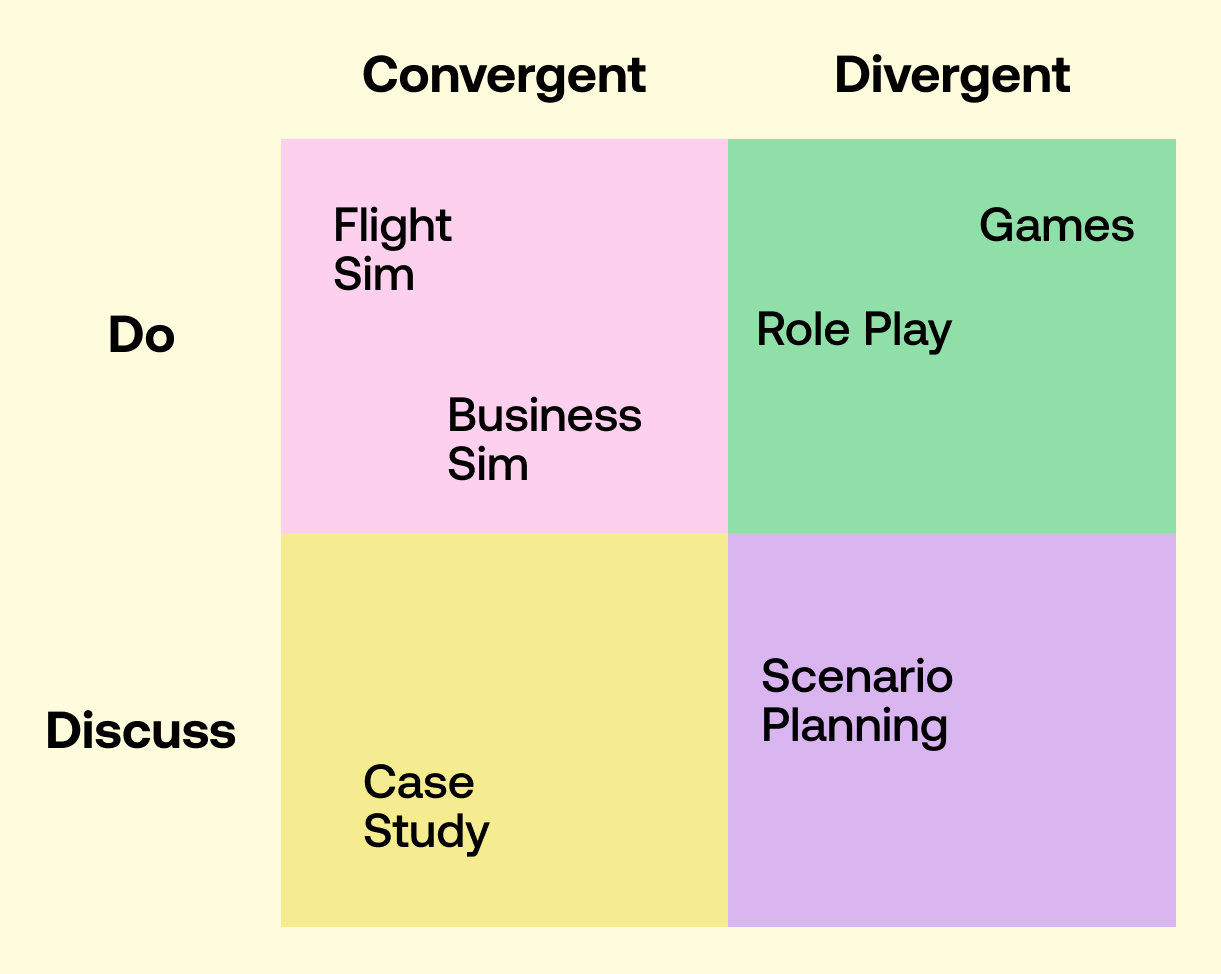
Each approach touches part of the problem. None of them solve it.
But this raises a question: if expertise isn’t built through content, how is it built?
Gary Klein spent years watching people make decisions that should have killed them - and didn’t.
He studied firefighters, intensive care nurses, military commanders. People operating at the edge of their training, where the textbook runs out and something else takes over. What he found surprised him.
These experts weren’t running probability calculations. They weren’t weighing options in some mental spreadsheet. Less than 12% of the critical decisions he observed involved comparing alternatives at all. The commanders just… knew. They’d look at a burning building and see a pattern - something about the way the fire was behaving, the structure of the space, the feel of the situation - and they’d act.
More than 80% of their decisions came down to pattern recognition.
There’s a famous study with chess masters that shows something similar. Researchers Chase and Simon showed a grandmaster a position from an actual game for five seconds, then took it away. The grandmaster could reconstruct almost the entire board. Show a novice the same position - they remembered maybe four pieces. Four pieces. Out of thirty-two. Brutal, but honest.
But scramble those pieces into a random arrangement - one that could never occur in a real game - and the grandmaster performs no better than the amateur. The advantage disappears.
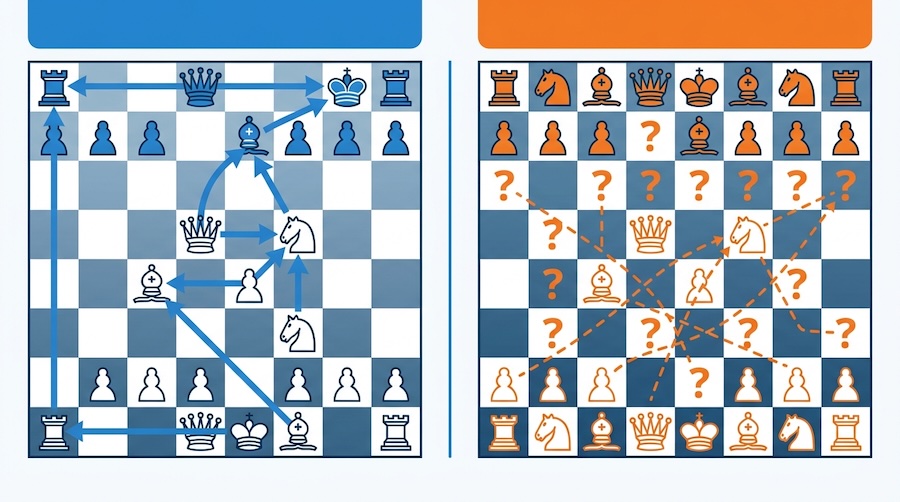
Experts don’t see more information. They see meaning. They perceive the board as a story, a situation with history and momentum. The novice sees scattered pieces. The master sees a developing attack, a weakened king, a position they’ve encountered - or something like it - a thousand times before.
Lia DiBello found the same pattern in business. She's spent decades studying how people develop it in organisations, working with over 7,000 professionals across industries.
What distinguishes top performers is a different kind of mental model - what she calls the “Triad” - an integrated sense of how the business works, how the market moves, and where they fit within it.
Average performers and experts often had the same information. But in the experts, it was organised differently. More connected. More automatic. They could read a situation the way a chess master reads a board.
You can’t lecture someone into this. You can’t transfer pattern recognition through slides and bullet points. The only way to build it is exposure - enough varied situations that the patterns start to emerge on their own.
So: if expertise can't be taught, can it be accelerated?
DiBello’s research pointed to something hopeful. Expertise couldn’t be taught in the traditional sense - but it could be compressed.
In studies across industries, she found that certain kinds of experiences accelerated learning dramatically. Not by a little. By years. People showing “statistically significant learning normally achieved in five years” in two to four weeks. Regardless of background. Regardless of culture.
The environments that produced this had four things in common.

The programs she studied also had a particular rhythm. Day one, people showed up with their default assumptions and watched them fail. Day two, they rebuilt. The failure wasn’t an accident - it was designed. That’s where the learning actually happened.
These four conditions describe what accelerates expertise. But they don’t yet describe how to build it.
Earlier we looked at what's been tried: simulations, role plays, scenario planning, case studies. Each touches part of the problem. None of them solve it.
The gap is in the top-right of that matrix - doing, but without fixed answers. Coherent situations you enter. Experiential, but requiring judgment.
It’s what we call Decision Rehearsal. The way actors rehearse, the way musicians rehearse, the way pilots rehearse. You're not learning information. You're building readiness for a moment that hasn't arrived yet.
Simulations tend to have fixed endpoints. Right answers. You’re testing whether someone can execute a known procedure under pressure. Flight simulators work this way - and they work brilliantly for what they’re designed to do.
But most business decisions don’t have right answers. They have tradeoffs. Competing priorities. Incomplete information and people who disagree about what matters. The goal isn’t to test execution. It’s to build judgment - the ability to read a situation, weigh competing factors, and act even when the path isn’t clear. Because that’s what real life is like.
That’s what scenarios are for. Not fixed paths to correct outcomes - coherent worlds where decisions matter but routes vary.
Good scenarios let you practice responding when it counts - building the judgment to find an answer rather than memorising one.
They share a few qualities:
There's another quality worth mentioning: engagement. Not "fun" in the gamification sense - but the kind of absorption that happens when something feels real and your choices matter. When the project is absorbing, actors don't dread rehearsal. Musicians don't dread practice. The experience is demanding, but it respects their intelligence.
At Wavetable, we learned this the slow way. We started with workshops - Miro boards, sticky notes, time to think. Comfortable. Collaborative. Fun, but also forgettable. So we added immersion - voice notes from characters, more setup. Better, but still too safe and linear. Then cold opens. No preamble, straight into tension. Heavier constraints. Less time to prepare a clever answer.
Participants loved it. Three months later, we checked: very little had transferred. They remembered the experience. They couldn't recall what they'd decided or why.
The problem wasn't the technology. It was the dynamics. Without real stakes - social, emotional, reputational - the decisions didn't encode. We'd built something fun. We hadn't built rehearsal.
That was when something shifted. We needed to separate skill-building from judgment-testing.
We call our approach SDS - Skill, Drills, Scenarios.
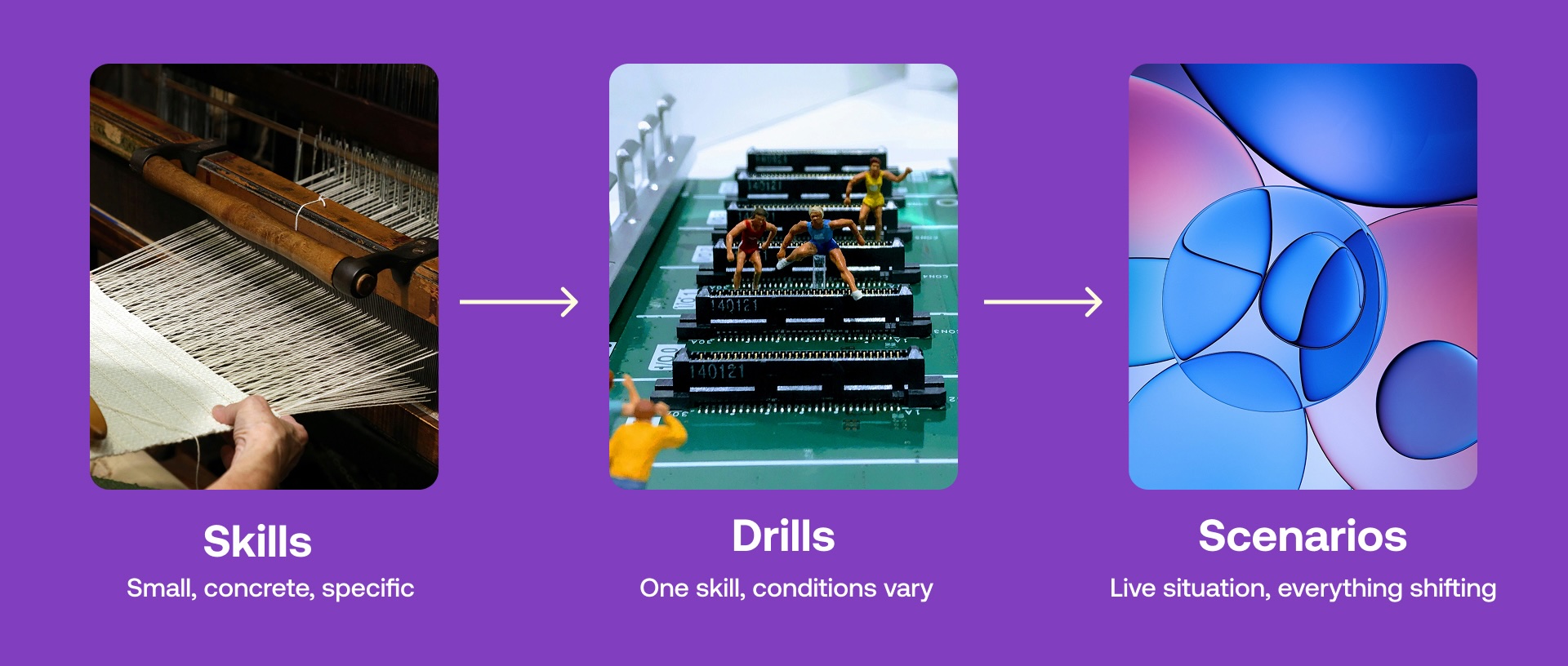
The easiest way to understand it is through sports. Drills are shooting practice - same motion, different angles, building muscle memory. Scenarios are practice games or scrimmages [2] - game speed, real defenders, decisions happening faster than you can consciously process.
You need both, though. Shooting practice alone won't teach you when to pass. Scrimmages alone won't fix a broken technique.
Drills build the moves. Scenarios build the judgment to use them.
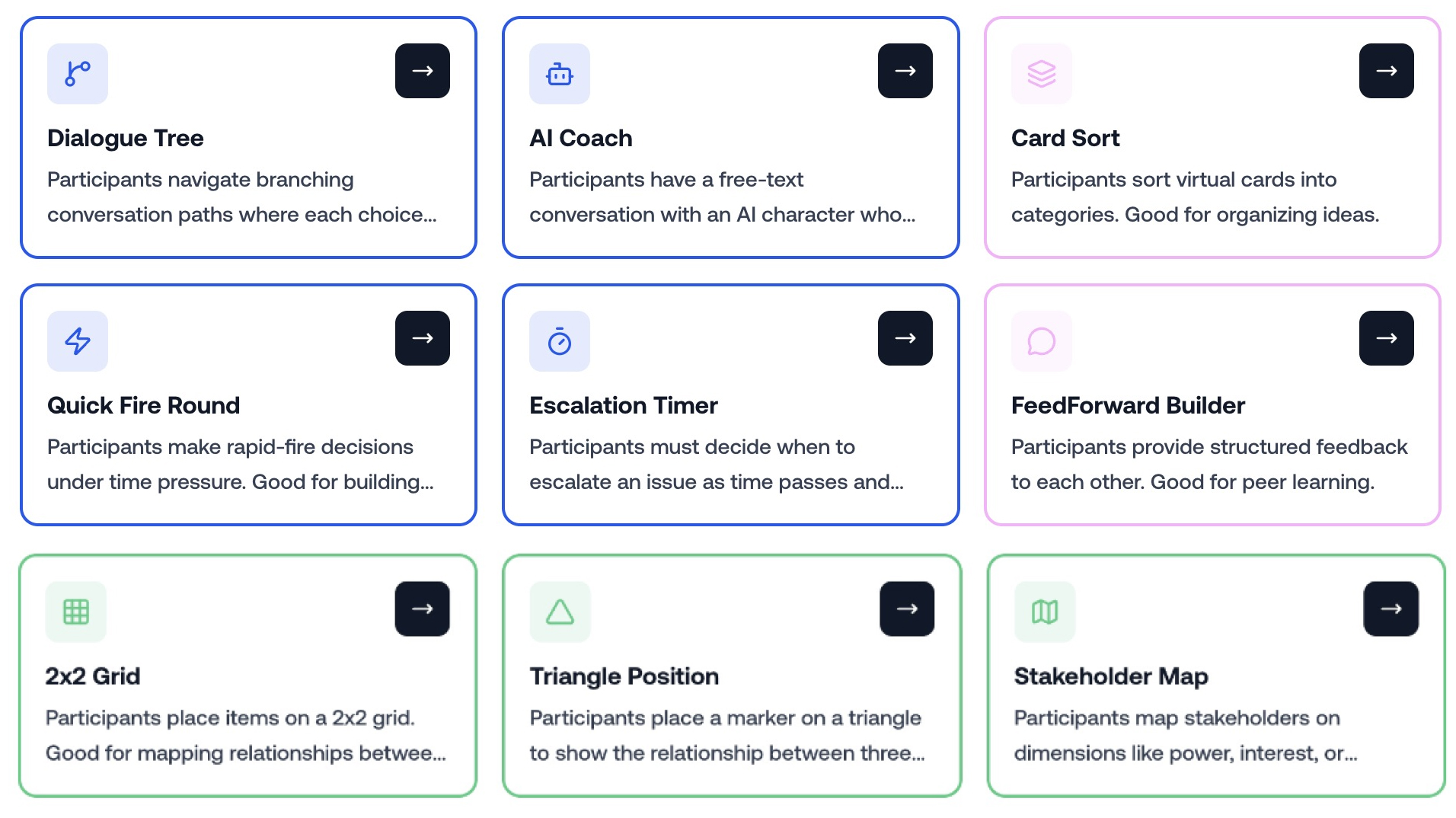
Now we build these on Rondo [3], our own platform - micro modules that play more like strategy games than case studies. Scroll down to try one.
[Interactive element: Rondo scenario embed]
Nate Hagens spent years on Wall Street before shifting to something harder to trade: what happens next. He's a renowned systems thinker focused on energy, climate, and how humans actually behave when facing uncertain futures - not how we'd like them to.
Nate's take: we're wired to want resolution. Our nervous systems crave a single future we can plan for. Careers and identities get attached to particular outcomes. Culture rewards the confident story over honest uncertainty.
The shift we need, he argues, is toward scenario thinking: "from trying to be right, to being prepared for several futures." Scenario thinking doesn’t come naturally. It has to be practiced. Not discussed. Practiced.
There’s a shift happening in what kind of capability actually matters.
AI is automating the knowledge layer fast. Information retrieval, analysis, synthesis - machines can do this now.
What's left? Judgment.
You’re probably hearing this a lot:
"We need someone with good judgment."
"That's a judgment call."
"With AI, judgment is critical."
But what is judgment?
Here's a working definition: Knowing which rules apply - and when they don't.
It's not knowledge. You can know a lot and still have poor judgment. It's not experience alone - some people repeat the same mistake for twenty years. It's the thing that lets you takewhat you know and figure out what to do with it, in this moment, with these constraints.
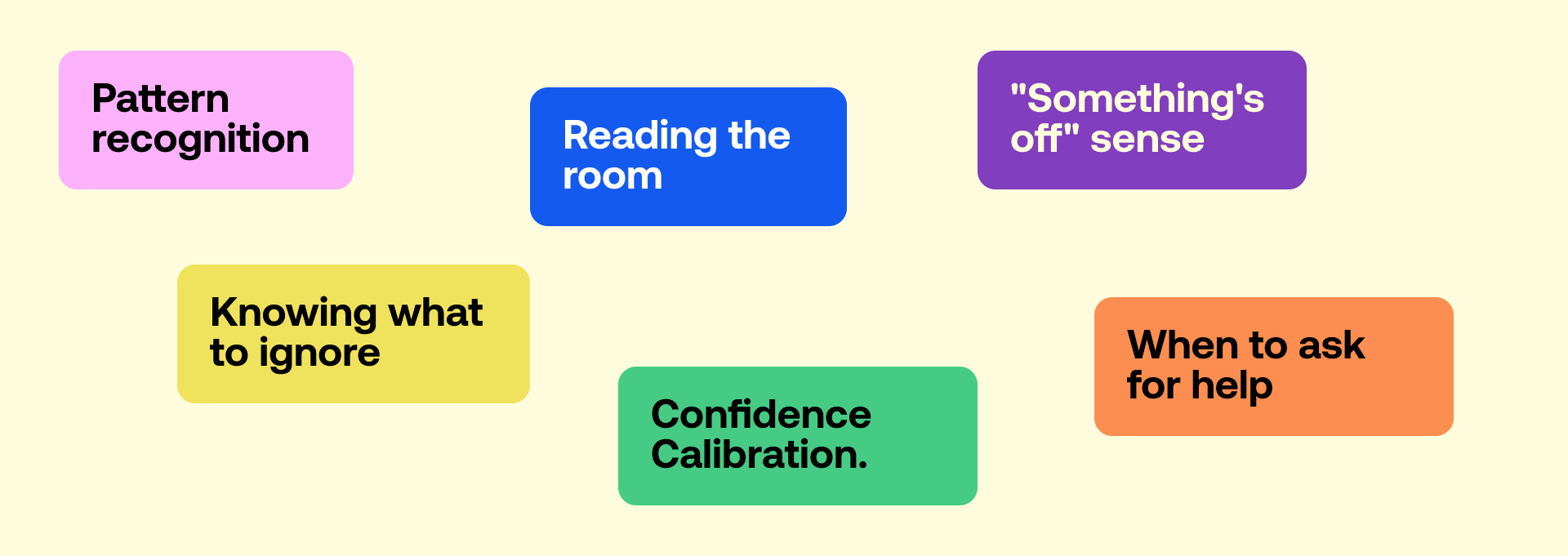
A few facets of judgment:
Judgment isn't one skill. It's a cluster of instincts, built slowly, through reps.
Which is why it's hard to teach. And why it matters. It's also why you can't outsource it - not to AI, not to consultants, not to a playbook.
Most training still targets the knowledge layer. Teaching what to think, not how to decide. That's a readiness gap - in organisations, in universities, in how we prepare anyone for a future that won't sit still and listen obediently.
We're not talking about better training. We're talking about a different kind of infrastructure entirely - one built for judgment, not compliance.
Organisations that keep investing in content will watch their people freeze when the playbook runs out. The ones building rehearsal infrastructure will have people who can actually decide.
Sully’s simulators didn’t teach him what to do on that day in January 2009. No training program had covered “geese destroy both engines over Manhattan.” That scenario didn’t exist.
What simulators gave him was something else - a library. Thousands of crisis patterns. Thousands of decision moments. Thousands of landings that didn’t go as planned, played out in a space where failure meant learning instead of death. When the real moment came, he wasn’t calculating probabilities or running through procedures. He was recognising. Matching the situation in front of him to patterns he’d built over decades.
That library didn’t come from reading about emergencies. It came from living through them - in compressed time, under real pressure, with consequences that mattered even when they weren’t fatal.
You don't need a digital platform to start. You need a situation with stakes, a decision with no clear answer, and consequences that matter to you. A meeting can be a rehearsal. A project kickoff can be a rehearsal. The format matters less than the pressure.
The capability that matters now isn’t prediction. We've spent decades learning to forecast - in school, in business, in life. Have a view. Defend it confidently. But confidence about one future is a liability when the world keeps offering several at once.
What matters is preparation. Not being right about what’s coming - being ready for what might.
Sully had 208 seconds because he’d already lived thousands of hours. The patterns were there when he needed them. They surfaced without conscious effort, guiding his hands to an outcome that looked like a miracle but felt, to him, like recognition.
Most of us don’t fly planes. But we all face moments where the textbook runs out and something else has to take over.
What’s your next rehearsal?
Wavetable designs decision rehearsal experiences for teams facing high-stakes moments. If your people know what to do but haven't practiced deciding, let's talk.
[1] Not all business decisions are wicked, of course. Pricing has feedback loops. Sales calls have win/loss data. Quarterly results tell you something. But the decisions that define careers -the strategic pivot, the difficult conversation, the call you make with incomplete information and the room watching - those rarely come with clear signals. By the time you know whether you were right, the moment has passed.
[2] In British English (this writer's native language), 'scrimmage' translates as 'a rough, disorderly struggle, a scuffle, or a confused fight'. We're not condoning fighting here. This is also a good reminder that American and British English are definitely different languages.
[2] ’Rondo' has two meanings: in music, a form where the main theme keeps returning after you've been somewhere else. In football, a drill where you practice decisions under pressure with defenders closing in. Both felt right.